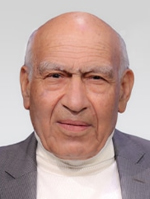
Dr. Ardeshir Ghavamzadeh (The Father of Bone Marrow Transplantation in Iran): The only capital that remains for us (academics, research teams and the country) are you, the young people. 1- The first successful bone marrow transplant was performed on identical twins, one of whom had leukemia, by Dr. E. Donal Thomas in Cooperstown, New York, in the late 1950s. 2- The first bone marrow transplant in Europe was performed on 5 nuclear industry workers from Yugoslavia - whose bone marrow was severely damaged by an explosion at the Vinca Nuclear Center in Yugoslavia by a French oncologist named Georges Matte in 1959. Of course, none of these were successful. 3- The first successful bone marrow transplant performed in unrelated patients was performed on a 5-year-old patient with severe mixed immunodeficiency SCID (he bone marrow sample was taken from a Danish patient) by Dr. Thomas in 1972. 4- In Iran, the first bone marrow stem cell transplant was carried out by Dr. Ardeshir Qavamzadeh and his colleagues at the Hematology, Oncology and Bone Marrow Transplant Research Center of Dr. Ali Shariati Hospital in Tehran, 1991 March 4, Monday. From that time until the end of the year 2021, 1,3963 bone marrow transplants were performed in transplant centers across the country. Currently, more than 20 transplant centers are operating in Iran. 5- The most common forms of bone marrow transplantation are: A- Autologous transplant: During this type of transplant, the patient receives his transplanted tissue (bone marrow). In this method, the patient's bone marrow is removed and the patient is exposed to strong anti-cancer drugs to kill the remaining malignant cells inside the patient's body. And then the patient's stem cells extracted by apheresis method are re-injected into the patient's body through the central vein (catheter). B- Allogeneic transplant: The patient receives the transplanted tissue from someone other than himself or his identical twin (such as a brother, sister, or any of the parents (haplo) or someone who has no relationship with the patient). This person should have close tissue compatibility with the patient's body (50-100%). 6- The most common diseases that are treated with bone marrow transplant are: A- Some cancers such as: leukemia, lymphoma, multiple myeloma B - Aplastic anemia C - Congenital neutropenia * Sickle cell anemia E - Hemoglobinopathies such as thalassemia and - myelodysplastic syndrome G- Some childhood cancers such as neuroblastoma H - Horler's syndrome and adrenoleukodystrophy * Immune system deficiency syndromes Y - Nocturnal paroxysmal hemoglobinuria K - primary amyloidosis L - Cancers of the reproductive system: testicular cancer, ovarian cancer And - diseases of the immune system Z-MA disease